Key Takeaways
- Peddi, starring Ram Charan and Janhvi Kapoor, released June 4, 2026 and faced immediate backlash over the alleged objectification of Janhvi’s character Achiyyamma
- Director Buchi Babu Sana publicly apologised on June 6 and confirmed changes would be made to the criticised scenes
- Janhvi Kapoor’s makeup artist Savleen Kaur Manchanda revealed that Janhvi had objected to certain shots during post-production — but the final edit kept the footage regardless
- Nithya Menen, speaking to Variety India, said actors must set clear boundaries from the start and that she does not believe anyone ends up “helpless” in such situations
- Menen defended the South Indian film industry, arguing objectification is a global trend in commercial cinema, not unique to any one industry
- Despite the controversy, Peddi has continued to perform strongly at the box office
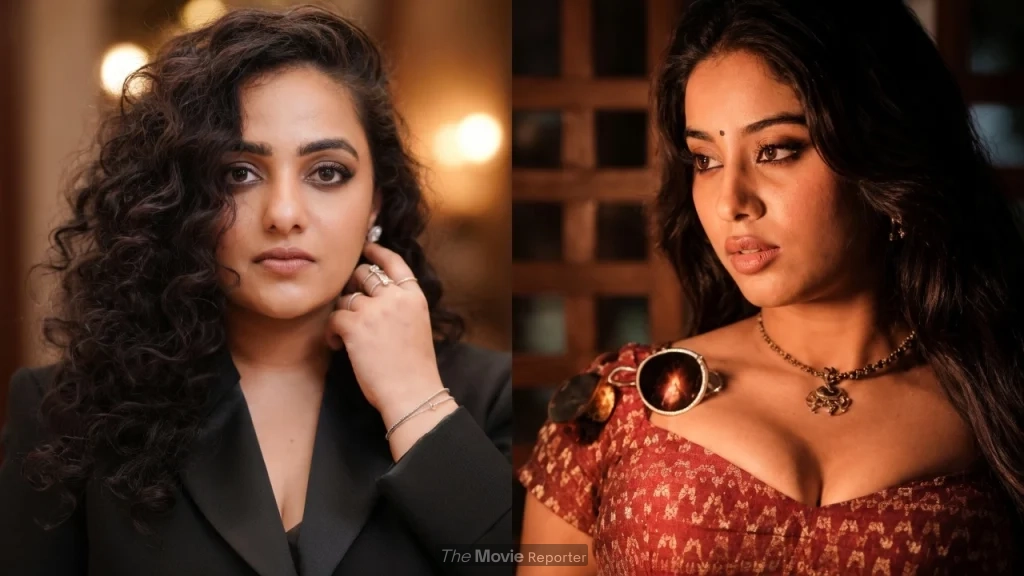
A Film, A Firestorm, and A Question the Industry Cannot Ignore
When Peddi hit theatres on June 4, 2026, audiences were expecting a high-octane Telugu sports drama starring Ram Charan. What they also got — and what many were not willing to stay silent about — was a controversy that has since pulled in voices from across the Indian film industry.
At the centre of it is Janhvi Kapoor’s character Achiyyamma. Sections of the audience and critics took strong issue with how the character is introduced and portrayed on screen, describing certain sequences as focused more on Janhvi’s body than on her as a person, and calling out a scene involving a kiss without consent. Within days of release, #PeddiControversy was trending — and the conversation has only grown since.
Now, acclaimed actress Nithya Menen has weighed in with a perspective that is thoughtful, direct, and quietly provocative.
What Triggered the Controversy
Set in rural Andhra Pradesh in the 1980s, Peddi is a ₹350 crore production directed by Buchi Babu Sana — the National Award-winning filmmaker behind Uppena (2021). The film follows a determined villager who uses sport to unite his community. It stars Ram Charan, Janhvi Kapoor, Shiva Rajkumar, Jagapathi Babu, and Divyendu, with music by A.R. Rahman.
Despite the big-screen spectacle, the backlash was swift. Viewers pointed to specific camera angles and scenes they felt hypersexualised Achiyyamma, reducing her to a visual rather than a character. A non-consensual kiss sequence drew particular attention and outrage online.
Director Buchi Babu Sana responded on June 6 with a public apology. “As a filmmaker, I believe cinema should entertain, inspire, and connect with audiences. It should never make anyone feel uncomfortable or disrespected,” he wrote. “I have always had immense respect for women, both on and off screen, and it was never our intention to objectify or disrespect any female character. We have heard the feedback and have taken it seriously.” He confirmed changes would be made to the relevant portions of the film.
The Makeup Artist Who Changed the Conversation
Just as the debate was beginning to point fingers at Janhvi Kapoor for accepting such a role, an unexpected voice stepped forward from her own team.
Savleen Kaur Manchanda, Janhvi’s longtime makeup artist, took to Instagram Stories on June 7 to share a post that reframed the entire narrative. According to Savleen, Janhvi had explicitly questioned the problematic shots during post-production and raised concerns about specific camera angles while filming was underway. The post read: “She drew a professional line, but the final edit kept the footage anyway. This isn’t a case of an actress failing to stand up for herself. It is a director choosing to ignore a boundary because he decided her consent mattered less than his box office numbers.”
Screenshots of private messages allegedly from Janhvi to fan clubs had also circulated online in the days prior, with the actress reportedly expressing discomfort about specific scenes. None of these have been officially confirmed by Janhvi’s team, but together with Savleen’s post, they paint a picture significantly different from the one the internet had initially settled on.
Nithya Menen: ‘The Root Lies in Hyper-Commercialisation’
Into this conversation stepped Nithya Menen — one of South Indian cinema’s most respected and consistently boundary-setting actresses, known for her work across Telugu, Tamil, and Malayalam films including O Kadhal Kanmani, Thiruchitrambalam, and Bheemla Nayak.
Speaking to Variety India, Menen said she has not seen Peddi and has not closely followed the controversy. But she had no hesitation sharing her position on objectification in cinema at large.
“I feel the root of the problem lies in the hyper-commercialisation of cinema,” she said. “Whatever works commercially and titillates the audience is often indulged in for mass success. Is it too much? Absolutely. I wonder if actors should actually have better boundaries and the person who’s performing the scene should be able to put their foot down and say they are not okay with being objectified.”
Menen was clear that she speaks from personal conviction, not theory. She said she has always known exactly what kinds of roles and scenes she is willing to take on — and that clarity has been her protection. “I cannot imagine being told to do something I am uncomfortable with, because I have always been clear about this from the start.”
‘I Don’t Believe You End Up Helpless’
The most debated part of Nithya Menen’s statement came when she addressed whether actresses can truly resist such situations — a question at the heart of the Peddi controversy.
“I also don’t believe that you end up helpless in a situation,” she said. “You can assert yourself. It depends on what that person’s priority is.”
She went further, adding a nuance that some will find uncomfortable. If an actress has spent years doing a certain kind of commercial cinema, she said, and then suddenly raises objections, those concerns may not be taken seriously by the industry. The message: credibility comes from consistency.
She acknowledged the professional cost of her own choices. “Are there films that I don’t get to do or genres that I don’t get to do because I don’t do certain kinds of stuff? Yes. But I am okay with it because I choose that over fame.”
It is a position that is honest, hard-won, and — depending on your perspective — either deeply empowering or deeply uncomfortable for the power dynamics it glosses over.
Defending the Industry, Broadening the Debate
Menen also pushed back against a narrative she has seen building online: that objectification of women is a specific disease of South Indian commercial cinema.
“I don’t think we can single it out and say this only happens in South Indian cinema. That’s not true. I think it happens everywhere. It’s a trend, and everyone follows it.” She pointed to the hyper-commercialisation of mainstream cinema globally — a system where whatever sells gets repeated, regardless of the cost to the women on screen.
It is a fair point, and one that matters. The Peddi controversy has sometimes been framed as a Telugu film industry problem. Menen’s intervention reminded the conversation that it is an industry-wide one — and that calling it out selectively is its own form of distortion.
What This Controversy Actually Reveals
Taken together, the Peddi controversy is not just about one film. It is about three separate but connected questions that Indian cinema has been reluctant to answer directly.
The first is about power: when an actress raises concerns during post-production, what recourse does she actually have? Savleen’s post suggests the answer is: not much, if the director decides otherwise.
The second is about responsibility: Nithya Menen’s position is that actresses must set clear boundaries early and consistently. It is a principled stance. But it also places the burden of protection on the person with the least institutional power in a film production.
The third is about accountability: Buchi Babu Sana has apologised and promised changes. The box office has not slowed down. The conversation continues — but whether it changes anything is a different question.
Final Thought
Nithya Menen’s words carry the weight of someone who has actually lived by the principles she is advocating. She has turned down commercial work, accepted smaller roles in passion projects, and built a career on her own terms. When she says “I choose that over fame,” it is not a hypothetical.
Whether that choice is as available to every actress — particularly those entering a system as large and commercially driven as the Telugu film industry — is the harder question that this controversy has forced into the open.
The debate is not over. And given how much Peddi is still making at the box office, it may take a long time before the industry decides it needs to change.
Have you been following the Peddi controversy? Do you think the responsibility lies with actresses, directors, or the system itself? Tell us in the comments below.
Sources: Free Press Journal, ETV Bharat, India TV News, News9Live, Gulf News, Wikipedia (Peddi)